Quick Answer
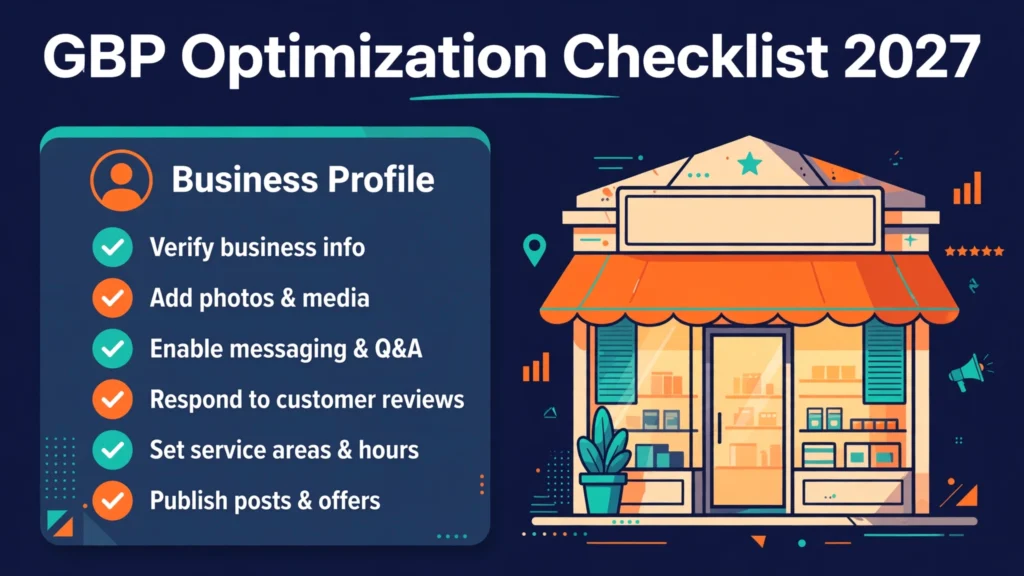
Google Business Profile optimization in 2027 means completing every field Google actually uses to judge relevance and prominence — correct primary and secondary categories, every real service listed separately, accurate hours and attributes, real photos on a schedule, a review-generation and reply system, and weekly posts — while avoiding the three suspension traps: keyword-stuffed business names, fake reviews, and addresses that don’t match a real location. The checklist below works through each field in the order that moves rankings, based on daily management of a 500-review UK profile and a 5.0-star personal profile.
What’s Actually Changed About GBP by 2027
Three shifts change how the checklist should be read.
The profile is now an AI source, not just a listing. AI Overviews and AI Mode pull business facts from profiles, reviews, and websites together. A half-empty profile gives the AI nothing to cite; a complete one with specific services, prices, and attributes gives it quotable facts. Profile completeness is now citation readiness.
Questions and answers have moved. The old profile Q&A section is being wound down — new questions now surface mainly through Maps and Ask Maps, and the durable home for those answers is an FAQ on your own website. Keep answering genuine questions wherever they appear, but don’t build your strategy on a section Google is retiring. Put the same answers on your site, where they also feed AI citations.
Review integrity enforcement is visibly stricter. Google removes reviews in waves — including genuine ones, as seen first-hand on a 500-review UK profile where real student reviews vanished after replies. That means two things: review generation must be continuous, not a campaign, and no review practice that bends the rules is worth it, because removals now arrive without warning.
Google’s own guidelines for representing your business on Google remain the baseline for everything below — when in doubt, the guideline wins over any tactic.
The Complete Checklist
1. Business name — exactly as the real world knows it
Why it matters: The name is the strongest identity signal on the profile, and the most common suspension trigger when abused.
What to check: The name matches your signage, website, and legal documents. No keywords added (“Best Driving School Ilford”), no taglines, no city names bolted on.
What a strong answer looks like: “FastLanez Driving School” — the trading name, nothing more.
Red flag: Any agency that offers to “optimize” your name with keywords. That edit can get the profile suspended, and reinstatement needs documents proving the real name.
2. Categories — primary first, then every honest secondary
Why it matters: Categories are how Google decides which searches you are eligible for. The primary category carries the most weight.
What to check: Is the primary category your actual main service? Are all genuine secondary categories added? (Note: not every category exists in the picker — if “Driving instructor” isn’t offered, “Driving school” stays primary rather than forcing a wrong category.)
What a strong answer looks like: A driving school with primary “Driving school” plus honest secondaries for the services it truly offers.
Red flag: Adding categories for services you don’t offer to chase their searches. It creates relevance Google can’t verify, and customers who arrive disappointed.
3. Services and products — one entry per real service
Why it matters: Each service is a separate search. A business with six services listed as one paragraph is invisible for five of them.
What to check: Every real service listed separately, with a description in the customer’s words and a price where the price is standard. Products added where they genuinely exist.
What a strong answer looks like: Manual lessons, automatic lessons, intensive courses, refresher lessons, mock tests, test-day car hire, Pass Plus — each its own entry, each with a real description.
Red flag: Copying a competitor’s service list. If you don’t offer it, don’t list it — the mismatch shows up in reviews.
4. Description — what you do, for whom, where
Why it matters: The description is indexed text and the first thing a careful customer reads. It is also where keyword stuffing is most visible to Google.
What to check: 750 characters used well: what you do, who it’s for, the areas served, and one proof point. No keyword lists, no ALL-CAPS claims, no promotional language Google’s guidelines forbid.
What a strong answer looks like: A plain-language paragraph naming the services, the areas, and a verifiable fact — years in business, number of students taught, rating.
Red flag: A description that reads like a keyword cloud. It helps nobody and risks an edit rejection.
5. Hours, attributes, and contact details — accurate beats impressive
Why it matters: Wrong hours are the fastest way to earn a 1-star review: a customer arrives to a closed door and blames Google’s listing — which is yours.
What to check: Regular hours, holiday hours, appointment-required status, phone number that is actually answered, website link that lands on the matching page, and attributes (wheelchair access, online appointments) that are true.
What a strong answer looks like: Hours verified against reality (for one UK profile, resolving a hours discrepancy meant confirming 7:00 AM–9:00 PM, seven days, before publishing anything else).
Red flag: “Open 24 hours” for a business that isn’t. Google and customers both notice.
6. Photos — real, recent, on a schedule
Why it matters: Photos are the most-viewed part of most profiles, and stale photos signal a stale business. Profiles with no photo added in two years read as abandoned.
What to check: Exterior (so customers recognize you), interior, team at work, and real service photos. Geotagged, descriptively named files. A schedule — new photos monthly at minimum.
What a strong answer looks like: Real photos of real work, in brand colors, with keyword-rich filenames and location metadata — the same standard applied to every GBP image in my own work.
Red flag: Stock photos, or AI-generated exterior shots. Never upload a fake exterior or identity photo — if the photo isn’t real, it doesn’t go on the profile.
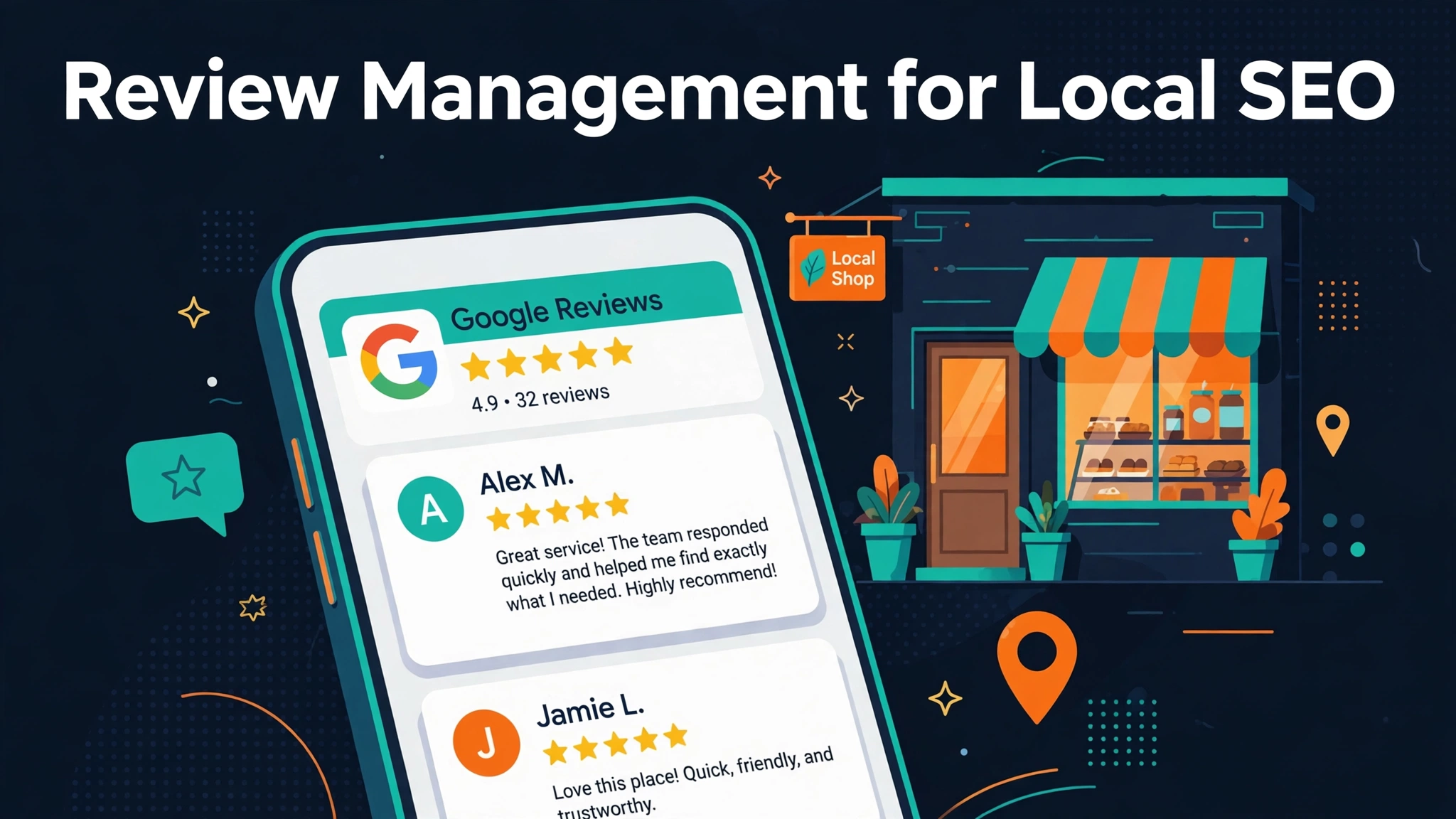
7. Reviews — a system, not a campaign
Why it matters: Reviews feed prominence, and recency matters as much as count. A profile frozen at 500 reviews slowly loses to one growing by ten a month.
What to check: A same-day ask after every good outcome, a direct review link (not a QR code to nowhere), and replies to every review within 48 hours — warm, personal, by first name, naming the instructor only if the reviewer named them, signed as the team. Negative reviews get an acknowledgement plus a phone number, never an argument.
What a strong answer looks like: Daily review monitoring, a backlog cleared at a sustainable pace (ten replies a day, not fifty — bulk activity on a previously suspended profile is a risk), and genuine review flow that survives Google’s removal waves.
Red flag: Incentivized, exchanged, or fake reviews — including the business’s own self-review. One confirmed fake can cost more trust than fifty real reviews build.
8. Posts — weekly, useful, with a real call to action
Why it matters: Posts keep the profile visibly active and give returning searchers a reason to click through. They don’t directly move rankings — treat them as conversion, not a ranking lever.
What to check: One post per week, each with a real offer, update, or guide, a photo, and a “Learn more” link to the matching page. Schedule at the audience’s morning, not yours — for a UK audience that means London 10:00 AM, which is Dhaka 4:00 PM when London is on GMT.
What a strong answer looks like: A 30-day post calendar planned in advance, each post tied to a real article or offer, published on schedule without gaps.
Red flag: Daily keyword-stuffed posts. Frequency doesn’t move rankings, and spammy posts get the profile flagged.
9. Questions, messaging, and booking — answer where customers ask
Why it matters: Unanswered questions and messages are lost customers who asked directly.
What to check: Messaging on only if someone actually answers it; a booking link added only if booking genuinely works through it; the website FAQ carrying the answers that used to live in profile Q&A.
What a strong answer looks like: Every genuine question answered once, well, and mirrored on the website FAQ so AI answers can cite it too.
Red flag: A booking button that leads to a dead form. A broken conversion path is worse than none.
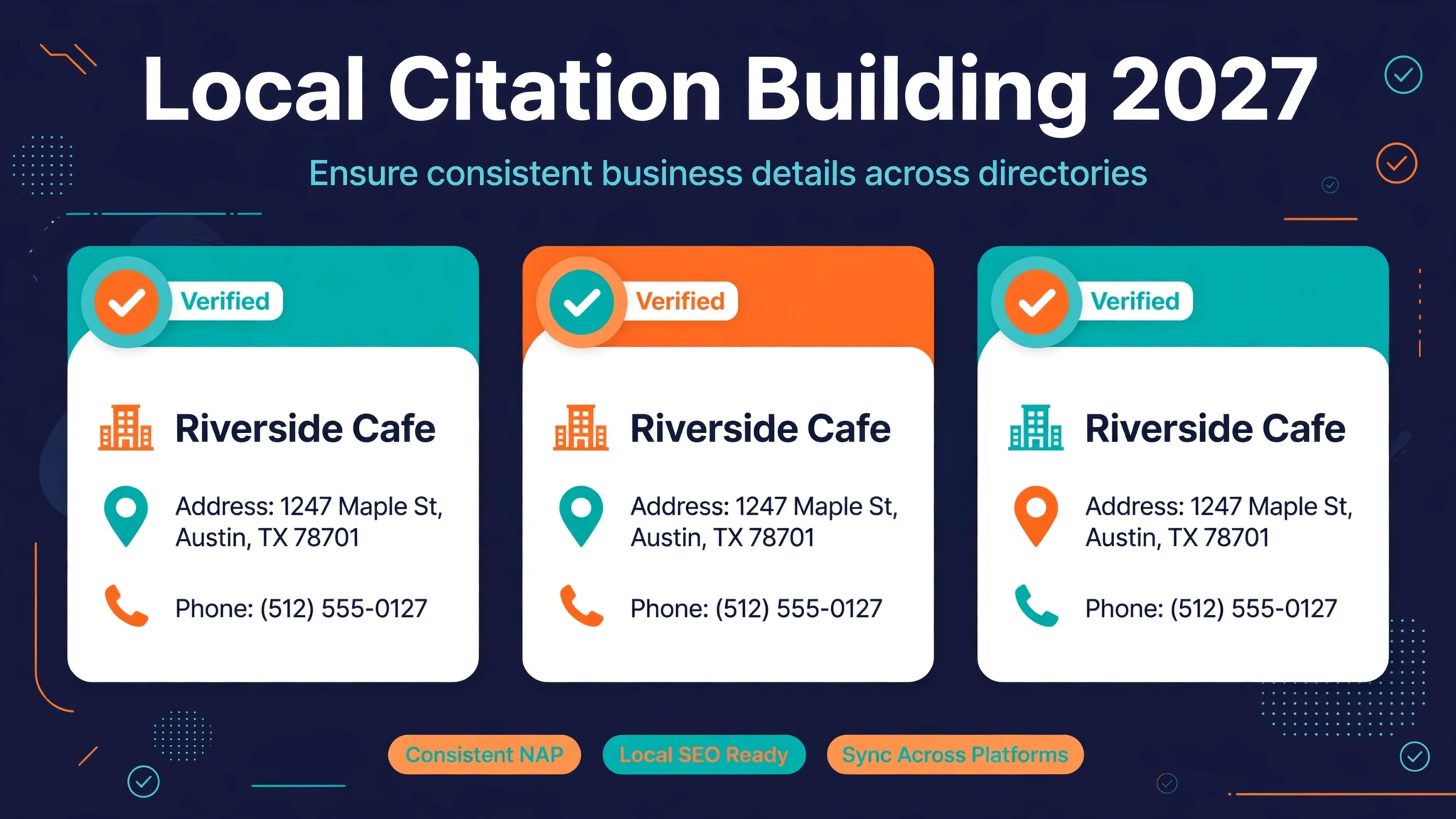
10. Citations and NAP consistency — the audit before the build
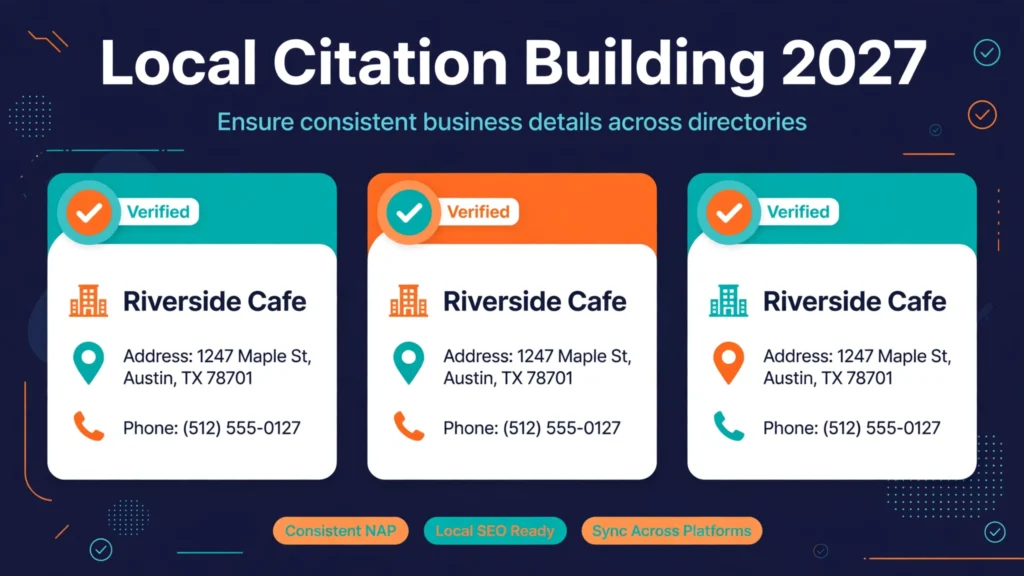
Why it matters: Citations reinforce the entity. Inconsistent ones contradict it.
What to check: The top directories for your niche and city audited for matching name, address, phone, hours, and website — corrected before any new listing is built.
What a strong answer looks like: A dozen live, consistent UK citations for a single business, each with the same NAP, logged with its live URL.
Red flag: Bulk-submitting to hundreds of directories with an uncorrected old address. That multiplies the error.
Checklist Scorecard
| Area | Done looks like | Check monthly |
|---|---|---|
| Name and categories | Real name, correct primary, honest secondaries | Category picker changes; new services |
| Services and products | Every real service listed separately | Price or service changes |
| Description and hours | Complete, honest, current | Holiday hours, service changes |
| Photos | Real photos added in the last 30 days | Photo age, cover photo relevance |
| Reviews | New reviews this month, all replied to | Response rate, removals, rating trend |
| Posts | At least one live post per week | Schedule gaps, expired offers |
| Citations | Top 20 consistent | New duplicates, moved listings |
Common Mistakes
- Optimizing the name with keywords — the fastest route to suspension.
- One profile per location, not per service — multiple profiles for the same business at the same address get merged or suspended.
- Ignoring the “pending edits” flag — edits under review aren’t live yet; assuming they are means reporting wins that haven’t happened.
- Replying to reviews in bulk — especially on a profile with a suspension history, steady pace beats bursts.
- Letting the profile go quiet — no posts, no photos, no replies for months reads as a closed business to customers and to Google.
The companion guide to this checklist — what local SEO actually is — explains the three ranking factors this checklist is built to serve, and the Local SEO services pillar lays out the four-discipline system behind both posts.
When You’re Ready to Move Forward
A complete profile is a week’s work; a profile that stays complete is a system. If you want that system — profile, reviews, citations, and posts maintained together, with suspensions handled from experience rather than panic — Tanveer Evan Rahat manages Google Business Profiles for businesses in Bangladesh and internationally, starting with an audit against this exact checklist so you can see what’s missing before anything is sold.
FAQ
How often should I post on my Google Business Profile?
Once a week is the sustainable standard. Posts stay prominent for about seven days, and frequency doesn’t directly affect rankings — so a useful weekly post beats five rushed ones, and a gap of months is the thing to avoid.
Does replying to reviews help rankings?
Directly, response rate is a prominence signal; indirectly, replies show future customers that the business listens, which drives the next review. Both effects matter, and neither requires anything beyond honest, prompt replies.
Why did Google remove my genuine reviews?
Google’s automated systems remove reviews in waves and sometimes catch real ones — this has been observed on profiles with hundreds of genuine reviews. The defense is continuous genuine review flow, not disputing every removal, and never replacing them with fake ones.
Can I add keywords to my business name to rank better?
No — Google’s guidelines prohibit it, competitors can report it, and it is a common suspension trigger. Rank with categories, services, reviews, and content instead.
What should I do if my profile gets suspended?
Fix the actual violation first (name, address, category, or reviews), gather documents proving the real business details, then submit reinstatement through the official route. Repeating the same submission without fixing the cause just wastes weeks.
Is the Q&A section still worth maintaining?
Answer genuine questions wherever they appear, but don’t build strategy on the old Q&A section — it is being wound down. Keep the same answers as an FAQ on your website, where they serve customers and AI citations permanently.