Quick Answer
Local SEO is the practice of making a business visible when someone searches with local intent — “dentist near me,” “best coffee shop in Ilford,” “plumber open now.” It is not regular SEO with a city name pasted on top. Google runs local searches through a different system: it weighs three factors — proximity, relevance, and prominence — and it answers through three different surfaces at once: the map pack, organic results, and AI-generated answers. A business that wins in 2027 is findable on all three, with the same consistent business facts everywhere Google looks.
What’s Actually Changed About Local Search by 2027
Local search used to be a simple equation: claim your Google Business Profile, get some reviews, rank in the map pack. Three shifts have made it a system instead of a checklist item.
AI answers now sit above the map pack for many queries. When someone asks Google a question with local intent — “which driving school in Ilford has the highest pass rate?” — an AI Overview or AI Mode answer may summarize several businesses before the user ever sees the map. That summary is built from business profiles, reviews, websites, and third-party mentions. If your business facts are thin, inconsistent, or missing, the AI has nothing solid to cite, and you are simply not in the answer. The mechanics of getting cited are the same ones covered in what AI SEO actually is.
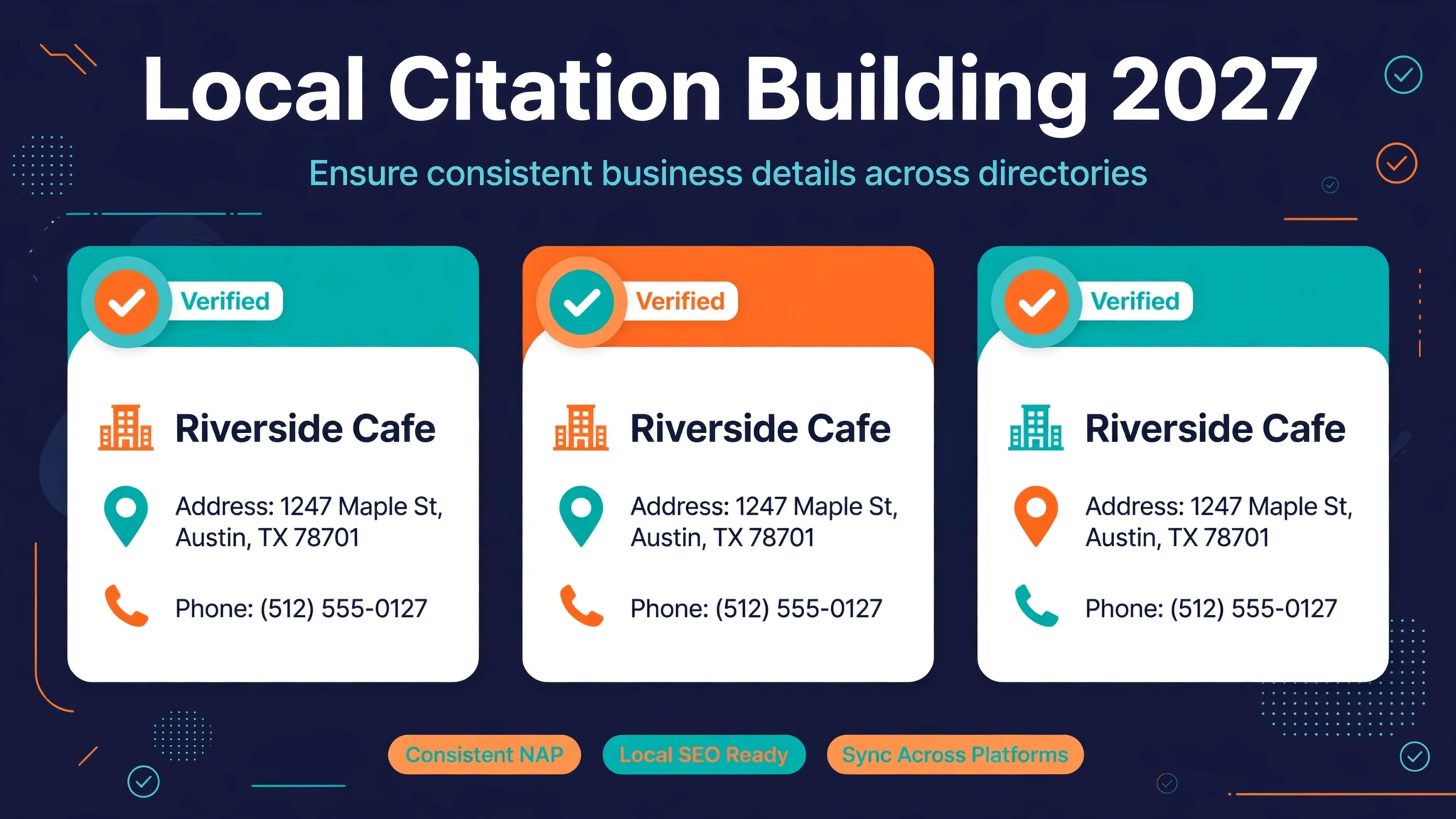
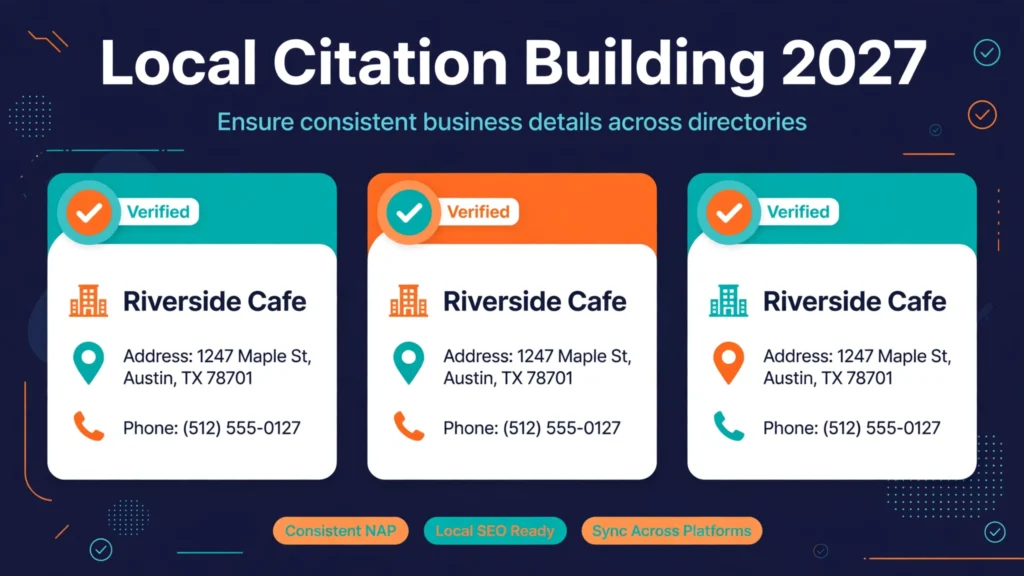
Google trusts entity consistency more than keyword repetition. Your business name, address, phone number, hours, and services — the NAP facts — appear on your profile, your website, directories, and review sites. When those facts disagree, Google’s confidence in the entity drops, and so does its willingness to show you. One correct address in five places beats five near-correct addresses in fifty places. Google’s own LocalBusiness structured data documentation shows exactly which facts it wants to see in machine-readable form.
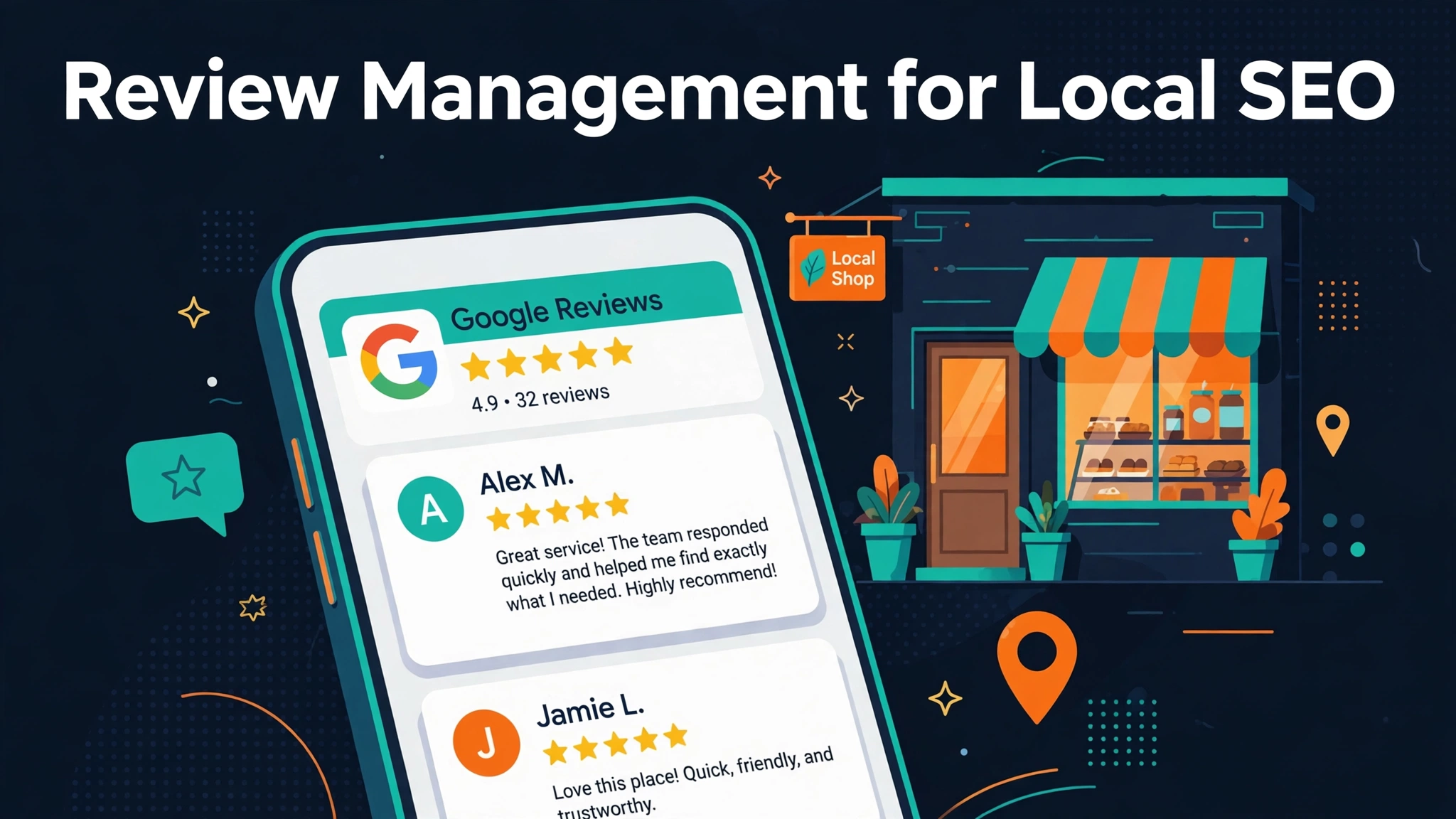
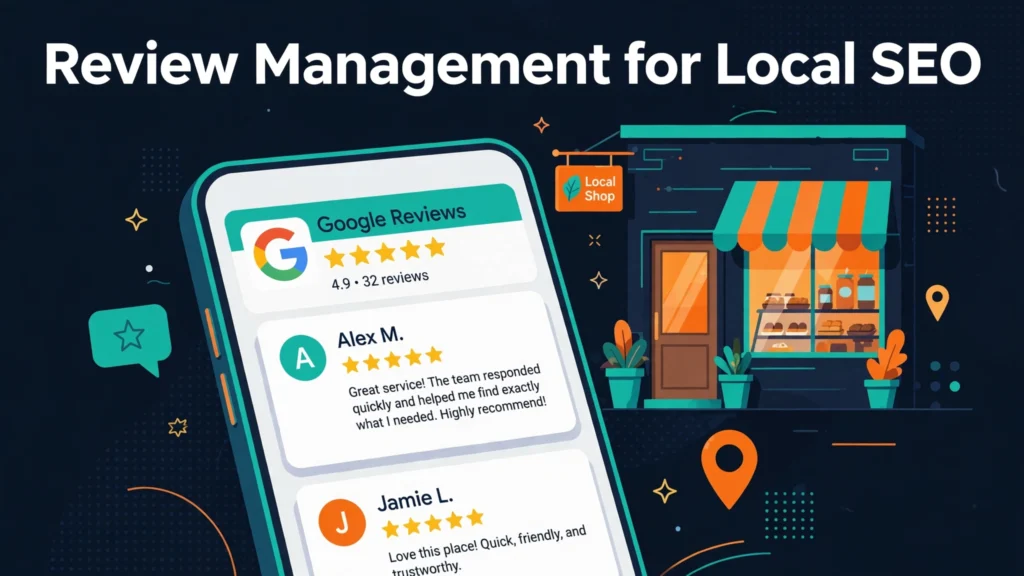
Reviews are now a ranking input, not just social proof. Review quantity, recency, velocity, and owner responses all feed prominence — Google’s measure of how well-known and trusted a business is. A profile with 500 reviews that keeps receiving fresh ones and answering them behaves very differently from a profile with 500 reviews frozen two years ago. This is first-hand observation from daily GBP management: on a 500-review UK driving-school profile, Google has repeatedly removed genuine reviews on its own, which means review generation can never be a one-time campaign — it has to be a system.
Local SEO vs Regular SEO: What’s Actually Different
| Dimension | Regular (national) SEO | Local SEO |
|---|---|---|
| The question being answered | “Who has the best answer?” | “Who is the best option near me, open now?” |
| Primary ranking surface | Organic blue links | Map pack, then organic, then AI answers |
| Decisive ranking factors | Relevance and authority, broadly | Proximity, relevance, prominence — together |
| Where trust is proven | Backlinks and content depth | Reviews, citations, and consistent NAP facts |
| Conversion action | Form fill, purchase, signup | Call, directions, booking — often within minutes |
| Geography | Mostly irrelevant | Everything — a business 500 metres away starts with an advantage you cannot buy |
The Bangladesh counterpart to this guide — local SEO vs national SEO in Bangladesh — works through the same choice for Bangladeshi businesses, where the map pack behaves differently because far fewer businesses have complete profiles.
The Three Ranking Factors, Honestly Explained
1. Proximity: how close you are to the searcher
Why it matters: Google’s job in a local query is to show options the searcher can actually reach. Distance from the searcher’s location — or from the place named in the query — is the one factor you cannot optimize with effort alone.
What to check: Is your service area set honestly? A business that claims a 50-mile radius it never serves will disappoint the customers Google sends, and those bad experiences come back as reviews.
What a strong answer looks like: Accurate address and service area, plus location pages and content that genuinely serve each area claimed — not a copied page with the city name swapped.
Red flag: Anyone promising to rank you in a city where you have no presence. Proximity is real, and workarounds for it — fake addresses, virtual offices — are exactly the things that get profiles suspended.
2. Relevance: how well you match what was asked
Why it matters: Relevance is the factor you control most. Google reads your categories, services, products, description, posts, and website content to decide whether you are what the searcher asked for.
What to check: Does your primary category match your actual main service? Are all real services listed as services, with descriptions in the customer’s words, not internal jargon? Does your website have a page for each service you claim?
What a strong answer looks like: A driving school lists manual lessons, automatic lessons, intensive courses, refresher lessons, mock tests, and test-day car hire as separate services — because each of those is a separate search.
Red flag: Keyword-stuffing the business name (“Best Cheap Driving Lessons Ilford 24/7”) to fake relevance. Google treats business-name spam as a policy violation, and competitors can report it.
3. Prominence: how well-known and trusted you are
Why it matters: Prominence is Google’s summary of your offline and online reputation: reviews, citations, mentions, links, and how often people search for you by name.
What to check: Review count, average rating, review recency, response rate, citation consistency, and branded search volume — all together, not one number in isolation.
What a strong answer looks like: A steady flow of genuine reviews, answered by the owner, across months — plus consistent listings on the directories that matter for the niche and the city.
Red flag: Bought or incentivized reviews. Google removes them in waves, and a profile that loses reviews in bulk looks worse than one that grew slowly. Never fake reviews — this is a hard rule in all my local work.
How the Three Surfaces Treat Local Intent Differently
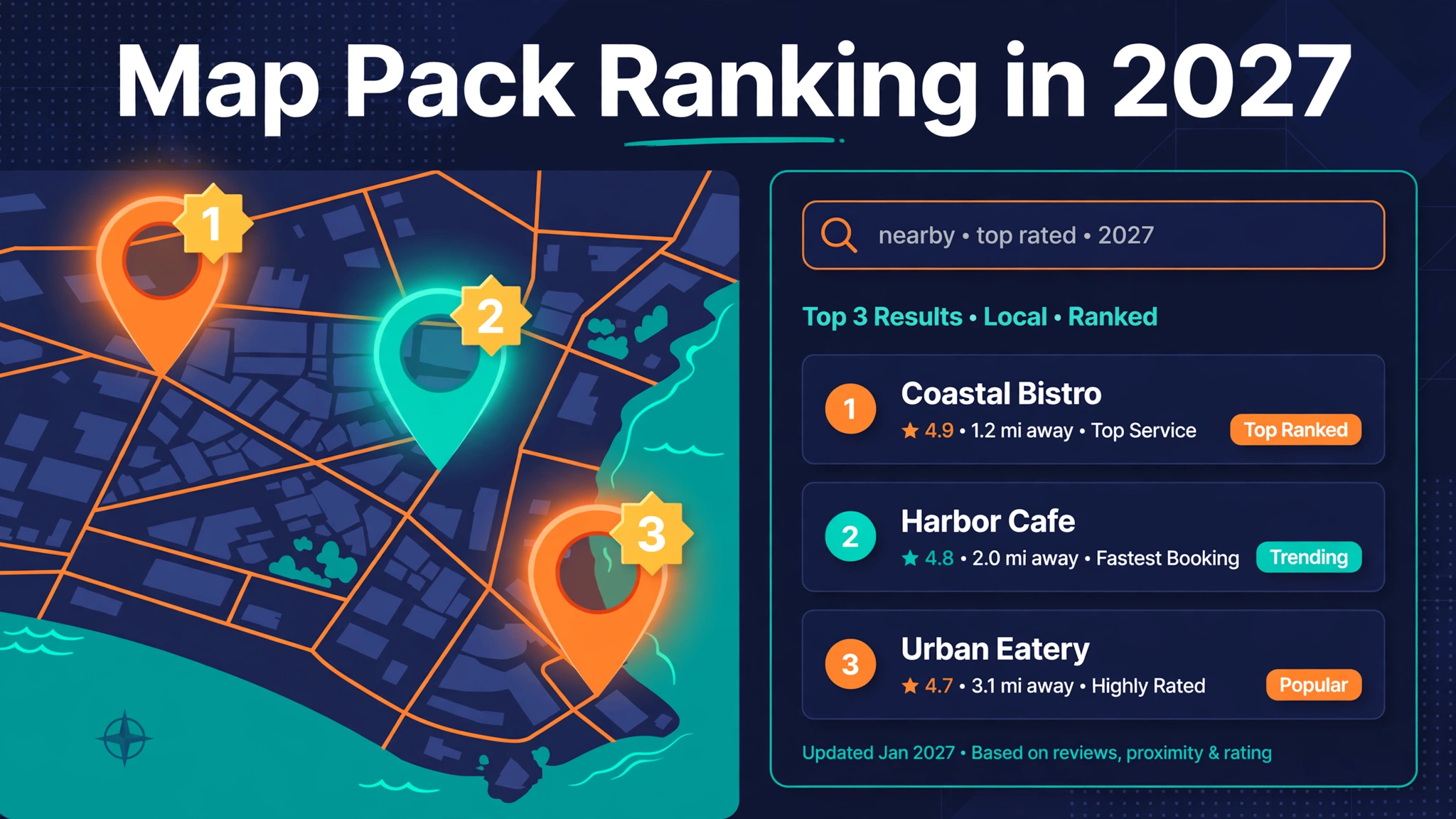
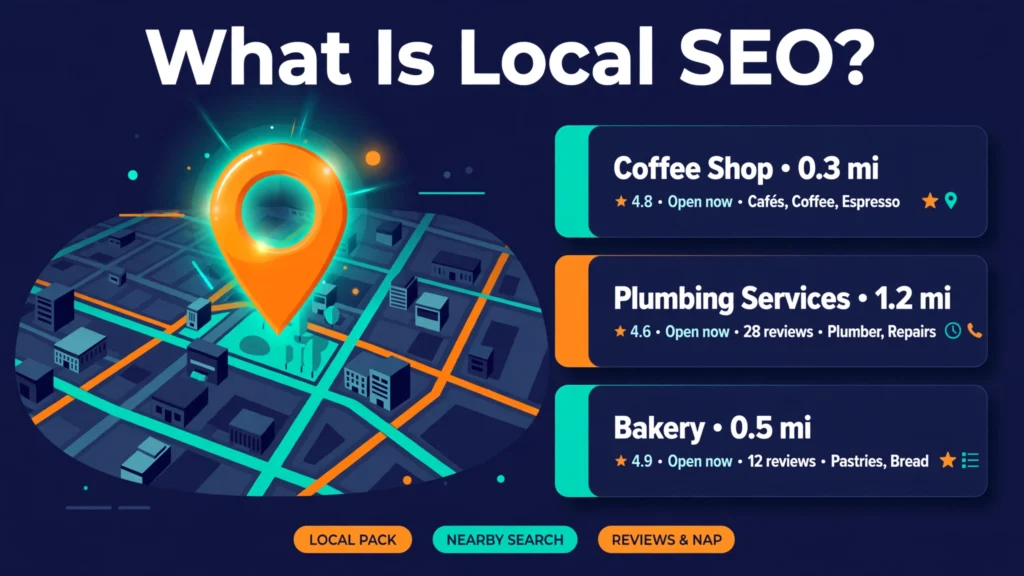
The map pack is proximity-first. It answers “near me” with three businesses, a map, ratings, and quick actions (call, directions, website). Winning here is mostly about complete profiles, strong prominence, and being genuinely close to the searcher.
Organic results are relevance-first. They answer the research version of the query — “how to choose a driving instructor,” “what does an intensive course cost” — with pages, not profiles. Winning here needs real content: service pages, guides, and location content that answers questions.
AI answers are entity-first. They synthesize across profiles, reviews, and websites, and they cite businesses whose facts are consistent and specific enough to quote. Winning here needs the same consistency as the map pack plus content with quotable, specific facts — prices, durations, processes — not generic claims.
A local business that only works one surface is leaving the other two to competitors. The system view is what the Local SEO services pillar is built around: profile, citations, reviews, and geo-content as four disciplines of one system, not four separate tasks.
Common Mistakes That Quietly Kill Local Rankings
- Inconsistent NAP across directories. An old phone number or a moved address on ten directories quietly contradicts your profile. Audit citations before building new ones.
- One category for a multi-service business. If you offer six services and list one category, five searches never see you.
- Ignoring reviews, good and bad. Unanswered negative reviews sit at the top of your profile and answer the customer’s question for you. A calm, specific reply with a phone number costs two minutes.
- Treating the profile as set-and-forget. Hours change, services change, photos age. A profile untouched for two years signals a business that may not be either.
- No website, or a website that contradicts the profile. Different hours, different services, different phone number — Google has to pick which source to trust, and it may pick neither.
- Chasing rankings in areas you don’t serve. It wastes effort and, when it involves a fake address, risks the whole profile.
How to Start: A 30-Day Local SEO Sequence
- Week 1 — Audit. Check your profile completeness, NAP consistency across your top 20 citations, review count and response rate, and whether your website matches your profile.
- Week 2 — Fix the profile. Correct categories, services, attributes, hours, and description. Add real photos — exterior, interior, team at work — not stock images.
- Week 3 — Start the review system. Ask every satisfied customer, the same day, with a direct review link. Reply to every review within 48 hours.
- Week 4 — Publish and post. One useful local post per week and one service or location page that answers a real customer question. Then repeat — local SEO compounds on consistency, not on launch-day effort.
The next post in this cluster works through the profile itself in full: the Google Business Profile optimization checklist for 2027.
When You’re Ready to Move Forward
Local SEO rewards the business that treats its Google presence as a living system — profile, reviews, citations, and content maintained together, month after month. If you want that system built and run for your business, Tanveer Evan Rahat runs local SEO for businesses in Bangladesh and internationally, from single-location shops to multi-area service businesses — starting with an audit of where your profile actually stands today, not a generic package.
FAQ
Is local SEO different from Google Maps SEO?
Mostly the same work with a narrower label. “Google Maps SEO” usually means ranking in the map pack specifically; local SEO covers the map pack plus organic local results, citations, reviews, and now AI answers. Do the full system and the map pack follows.
How long does local SEO take to show results?
Profile fixes can change map-pack visibility within weeks; review and citation systems typically need 1–3 months of steady work to move prominence; competitive cities take longer. Anyone promising a fixed date for a map-pack position is selling something Google does not guarantee.
Do I need a website for local SEO?
Strictly, a profile alone can rank. Practically, no — your website is where relevance is proven in depth, where AI answers find quotable facts, and where customers land when they want more than a phone number. A profile without a matching website is a weak entity.
Can a business rank in a city where it has no address?
Service-area businesses can rank across the areas they genuinely serve, but proximity still applies — you will usually rank best near your real base and where your reviews and citations concentrate. Ranking in a city with no presence at all is not something honest local SEO promises.
Do citations still matter in 2027?
Yes, but selectively. Consistent citations on relevant, trusted directories still support entity confidence; bulk submissions to hundreds of low-quality directories do not. The full picture is in the cluster’s citation post, coming next in this series.
What gets a Google Business Profile suspended?
The common triggers are keyword-stuffed business names, addresses that don’t match a real location, fake reviews, wrong categories, and multiple profiles for one business. Suspensions are recoverable with documents, but each one costs weeks — prevention is cheaper than reinstatement.