Quick Answer
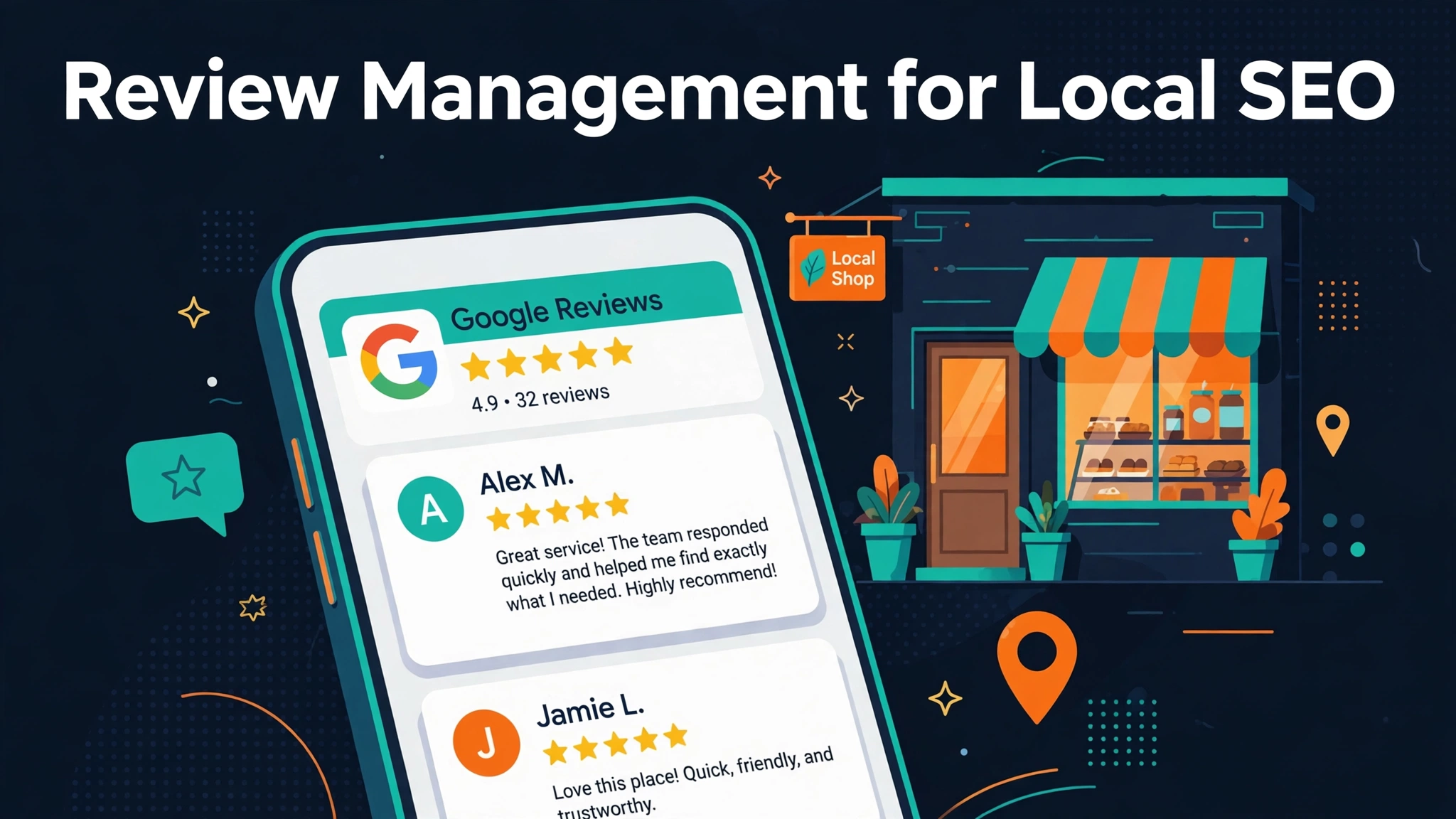
Reviews affect local rankings in two ways at once. For Google, review quantity, recency, velocity, and owner responses are part of prominence — how well-known and trusted a business looks compared with nearby competitors. For customers, reviews are the last check before they call: a profile with recent, specific, answered reviews converts in a way a profile with old, generic reviews does not. The work that moves both is a system, not a campaign: ask every satisfied customer the same day, reply to every review quickly and specifically, and never fake, buy, or filter reviews. One burst of fake reviews can cost more prominence than a year of slow, honest growth, because Google removes reviews in waves — including genuine ones — and a bulk loss is visible to everyone.
What Has Actually Changed About Reviews by 2027
Three changes have made review management harder to fake and easier to lose ground on, and all three are visible in day-to-day profile work rather than in announcements.
Review removal is now a normal operating condition, not a rare event. Google removes reviews in waves, and genuine reviews disappear alongside spam. This has been observed first-hand on a UK driving-school profile with more than 500 reviews and a daily review-reply system: totals fall without warning, replies attached to removed reviews go with them, and no appeal restores a review Google has decided to remove. The practical consequence is that review generation can never be finished. A business that stops asking will watch its prominence decay even if it did nothing wrong. The mechanics behind this sit inside the wider local system explained in what local SEO is and how local search works.
AI answers now quote reviews before the customer reaches the profile. For question-style local searches, an AI Overview or AI Mode answer may summarise what reviewers say about several businesses before the map pack is even seen. Reviews that mention the actual service in natural language — the lesson type, the treatment, the delivery area — are quotable evidence. Reviews that only say “great service” are not. Review content has therefore become part of the business’s AI-answer footprint, not just its star rating.
Response behaviour is part of the signal customers actually read. Google states that it weighs owner responses alongside review content, and customers read replies as a sample of how the business handles problems. A profile where every review has a short, specific, human reply reads as a business that is still paying attention. A profile with hundreds of reviews and no replies reads as abandoned, whatever the star average says. The full profile discipline behind this, including categories, services, and posts, is in the Google Business Profile optimization checklist for 2027.
Google’s own review policies are the boundary for everything in this post: how Google ranks local results sets out the local factors, and review content must follow the platform’s rules on fake engagement and conflicts of interest. If a tactic would not survive being described to Google, it does not belong in a review system.
The Five-Part Review Management Framework
Each part below follows the same structure: why it matters, what to check, what a strong answer looks like, and the red flag that means the system is broken.
1. Generation: ask everyone, the same day, with no filter
Why it matters: Velocity and recency decay fast. A steady flow of new reviews signals a business that is active now; a cluster of old reviews signals one that may have changed hands, changed quality, or stopped caring. Generation is also the only part of prominence that compounds: every genuine review is both a ranking signal and a piece of quotable evidence for AI answers.
What to check: How many reviews arrived in the last 90 days? Is the request made after every satisfied customer, or only when someone remembers? Is there a single direct review link that works on a phone in under a minute?
What a strong answer looks like: A same-day request after every completed job, lesson, or appointment, sent by the person who delivered the service, with the direct review link and no script for what to write. No incentive is offered, no wording is suggested, and unhappy customers are asked just as readily as happy ones. Filtering — asking only customers you expect to praise you — is review gating, and it is against Google’s policy as well as being a distorted picture of the business.
Red flag: A sudden burst of reviews on one day, several reviews using near-identical phrasing, or a long silence followed by a campaign. All three patterns invite removal, and removal is the one prominence loss that cannot be appealed back quickly.
2. Replies: every review, within 48 hours, specific and human
Why it matters: Replies are the only part of the review system the business fully controls, and they are read by the next hundred searchers, not just the reviewer. A specific reply proves the business remembers the job. A generic “Thank you for your review” proves only that someone pasted a template.
What to check: What proportion of reviews has an owner reply? How fast are replies posted? Do replies reflect the specific service the reviewer mentioned, or could the same reply fit any review on any profile?
What a strong answer looks like: Thank the reviewer by first name, reflect the specific service or outcome they mentioned, add one useful detail for the next reader (for example, the area served or the booking route), and sign as the business team. Keep it short. For a five-star review, two or three sentences are enough; the reply is for future readers, not a second thank-you speech.
Red flag: Copy-pasted replies, keyword-stuffed replies, or replies that argue with the reviewer. Replies are public and permanent in effect even when the review itself is later removed — write every reply as if a prospective customer will read it in isolation, because they will.
3. Negative reviews: acknowledge, move offline, fix the cause
Why it matters: A negative review answered well often converts better than no negative review at all, because it shows how the business behaves when something goes wrong. A negative review answered badly, or ignored, becomes the review every future searcher remembers.
What to check: Is there a written owner-side procedure for negative reviews, or does each one get improvised? Does the reply give a phone number or contact route? Is the underlying cause tracked, or does the same complaint recur?
What a strong answer looks like: Acknowledge the experience without disputing facts in public, apologise for the specific disappointment, give a direct phone number, and invite the reviewer to continue the conversation offline. Do not offer compensation in public, do not name staff members the reviewer did not name, and do not ask the reviewer to remove the review. Then fix the cause internally and record what changed, so the next reply can honestly say the issue was addressed.
Red flag: Public arguments, blaming the customer, claiming a genuine review is fake without evidence, or offering incentives to change a review. Each of these creates a second, worse record than the original complaint.
4. Review content: specific, natural, service-shaped language
Why it matters: Reviews influence relevance as well as prominence. When reviewers naturally mention the service, the area, and the outcome, they reinforce what the business does and where it does it, in the customer’s own words. That language is also what AI answers quote. Generic praise reinforces nothing.
What to check: Do recent reviews mention real services and places, or only general praise? Do they describe outcomes a future customer would care about — passing first time, a completed installation, a resolved problem?
What a strong answer looks like: Nothing the business writes itself. The business earns specific reviews by being specific in its own profile and website: services listed separately, areas named honestly, outcomes described plainly. Customers mirror the language the business already uses. The service and category discipline that makes this possible is part of ranking in the Google Map Pack, where relevance and prominence meet.
Red flag: Asking customers to use particular keywords, providing draft wording, or rewarding reviews that mention a service. That is incentivised content, it reads as fake to readers and to Google, and it poisons the evidence the business is trying to build.
5. Monitoring: watch for removal waves and act on what survives
Why it matters: Review totals are not stable. A profile can lose genuine reviews overnight, and a business that only checks its total monthly will misread a removal wave as a demand problem. Monitoring turns review data into operations: which services get praised, which complaints repeat, which areas produce the most reviews.
What to check: Is the review total, average rating, and reply rate checked at least weekly? Are removed reviews noticed, and are surviving reviews read for patterns rather than just counted? Are repeat complaints routed to the person who can fix them?
What a strong answer looks like: A weekly check of new reviews, replies, and total movement, with a simple log: date, reviewer first name, service mentioned, reply posted, action taken. When a removal wave hits, the response is to keep generating genuine reviews and keep replying — not to buy replacements. When a complaint repeats, the response is an operational fix, recorded so the team can see the pattern break.
Red flag: Panic-buying reviews after a removal wave, disputing every negative review as fake, or treating the star average as the goal instead of the by-product. The average follows the system; chasing the average directly is how profiles get suspended.
What Google Actually Weighs: A Working Summary
| Signal | What it means in practice | How to improve it honestly |
|---|---|---|
| Quantity | Total genuine reviews over the life of the profile | Ask every customer, every time, for years — not in bursts |
| Recency | How fresh the newest reviews are | Same-day requests; never let 90 days pass without a new review |
| Velocity | The pace of new reviews over time | Steady flow tied to real completed jobs, not campaigns |
| Owner responses | Whether and how fast the business replies | Reply to every review within 48 hours, specifically |
| Review content | Specific services, areas, and outcomes in natural language | Be specific in the profile and website; customers mirror it |
| Rating distribution | The shape of the star profile, not just the average | Earn the mix honestly; a perfect average with no detail reads as filtered |
None of these signals can be bought safely, and none of them is a substitute for the others. A high average with no recent reviews loses to a slightly lower average with fresh, answered reviews — because the second profile looks alive, and the first looks finished.
Common Mistakes
- Review gating. Only asking customers who seemed happy, or filtering requests through a private survey first. It distorts the picture, violates policy, and collapses the moment Google or a customer notices the pattern.
- Incentivised reviews. Discounts, gifts, or entry into a draw in exchange for a review. The review may survive, but the business has bought evidence it cannot defend and trained customers to expect payment for honesty.
- Template replies. The same thank-you on every review, sometimes with keywords forced in. Readers notice within three reviews, and the replies stop functioning as evidence of attention.
- Arguing in public. Disputing facts, blaming the reviewer, or posting internal details. The reply outlives the argument and becomes the business’s public record of how it treats complaints.
- Treating removal as a crisis to fix with volume. Buying or soliciting a burst of reviews after a removal wave. The burst pattern is itself a removal trigger, and the second loss is usually larger than the first.
- Publishing a static review claim. Advertising a fixed count or rating (“500+ reviews, 4.9 stars”) on a website while Google removes reviews in waves. The claim goes stale without warning. Live review widgets that show the current figure are the honest alternative — this is why a static claim was dropped from client website work in October 2026 in favour of live data.
When You Are Ready to Move Forward
Start with one week of the system, not a one-off push: same-day requests after every job, replies to every review within 48 hours, and a weekly check of what arrived, what was removed, and what complaints repeated. If the profile is already large, clear the reply backlog oldest-first in small daily batches — the same discipline used on a 500-review UK profile, where backlog replies are posted at a capped daily rate so the pattern stays natural. If citations are inconsistent or the profile itself is incomplete, fix those first, because reviews cannot carry a profile whose basic facts disagree with each other — see the local citation building guide for 2027 and the local SEO services that cover the full system.
Tanveer Evan Rahat manages local SEO for businesses that depend on Google Maps and reviews to win customers, including daily review operations on a 500-review UK driving-school profile. If reviews are the part of your local presence that keeps slipping, start with a conversation about the system — generation, replies, and monitoring — rather than another one-off review push.
FAQ
Do reviews directly affect Google Maps rankings?
Yes, as part of prominence. Google weighs review quantity, recency, velocity, and owner responses alongside citations, links, and mentions. Reviews alone do not outrank a nearer, more relevant competitor, but among similar nearby businesses, the profile with the stronger, fresher, better-answered review record wins.
Should I reply to every review, including five-star ones?
Yes. Reply to every review within 48 hours, briefly and specifically. Five-star replies are read by future customers as evidence of attention; negative-review replies are read as evidence of character. A profile with no replies reads as unmanaged, whatever its rating.
Can I ask customers to mention a specific service in their review?
No. Do not provide wording, keywords, or drafts, and do not reward reviews that mention a service. Ask for an honest review with the direct link and nothing more. Specific language comes from customers mirroring the specific services and areas already named on the profile and website.
What should I do when Google removes genuine reviews?
Keep generating genuine reviews and keep replying. Do not buy replacements, do not dispute every removal, and do not treat the total as a fixed asset. Removal waves are a normal operating condition; the system that survives them is steady generation over months, not a burst after each loss.
Is it safe to show my review count and rating on my website?
Only as live data. A static claim goes stale the moment Google removes reviews, and a stale claim misleads visitors. Use a live review widget that reflects the current figure, or avoid the claim entirely and let the profile speak for itself.
How long does it take for review work to show in rankings?
There is no fixed timeline, and anyone promising one is guessing. Expect the reply and generation system to be visible to customers within weeks, and prominence to build over months of steady flow. Review work compounds with the rest of local SEO — profile completeness, citations, and content — rather than acting alone.