Quick Answer
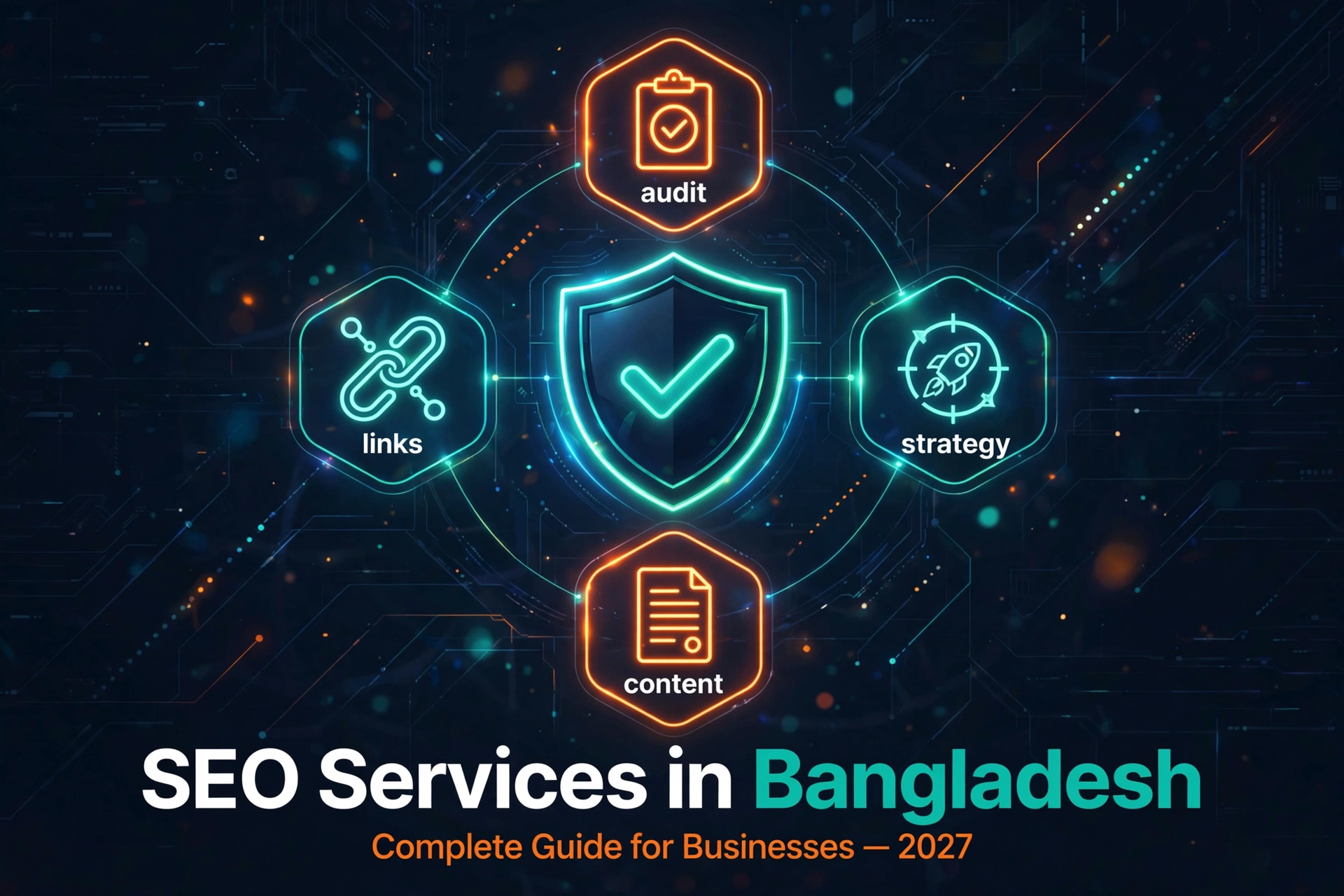
SEO services in Bangladesh fall into six disciplines: technical SEO, on-page and content SEO, off-page authority building, local SEO and Google Business Profile management, entity and AI search optimization, and audits and consulting. Most businesses need three or four of them — not all six — and the right mix depends on where your customers search, not on what a provider’s package happens to include. The single most reliable buying rule: never pay for any of them before an audit tells you which ones your site actually needs. A provider who quotes a monthly fee without looking at your website is selling a checklist, not a strategy.
By 2027, one more filter applies to every service on this list: does the provider understand AI-driven search? A large share of queries in Bangladesh are now answered inside Google’s AI Overviews, AI Mode, ChatGPT, or Gemini before the user ever reaches the blue links. Traditional rankings still matter — but a service plan that ignores AI citations is planning for 2022.
What’s Actually Changed About Buying SEO Services by 2027
Most “complete guides” to SEO services describe the same six disciplines the same way they were described five years ago. Three shifts change what you should actually buy now:
AI search optimization is a real service line, not a buzzword. Structuring content so AI systems extract and cite it — entity optimization, FAQ and definition schema, author authority signals, citation-worthy formatting — is now distinct, billable work. Plenty of Bangladeshi providers list “AI SEO” on their services page; far fewer can show you a client whose content is actually being cited inside an AI Overview or a ChatGPT answer. Ask for the evidence, not the label. The mechanics are explained in what AI SEO actually is.
Google’s spam enforcement now punishes how most cheap packages operate. Google’s spam policies explicitly target “scaled content abuse” — mass-produced, low-value pages built primarily to manipulate rankings, including AI-generated content with no added value — alongside link schemes. The classic Bangladeshi budget package (dozens of thin location pages + bulk directory links per month) isn’t just low quality anymore; it’s a policy risk. If a provider’s deliverables look like volume for volume’s sake, walk away.
The audit-first expectation is now non-negotiable. Free tools — Google Search Console, PageSpeed Insights, Semrush’s free domain checks — make a site’s basic condition visible to anyone in minutes. There is no longer any excuse for a provider to quote blind. A serious engagement starts with diagnosis: what’s broken, what’s missing, what it costs to fix. Our complete guide to SEO experts in Bangladesh breaks down how to evaluate that diagnostic phase before you commit to anything.
The 6 Core Services, Explained Honestly
Each discipline below follows the same structure: what it actually covers, how to tell it’s being done properly, and the red flag that tells you it isn’t.
1. Technical SEO
What it covers: whether search engines can find, crawl, render, and understand your site — indexation and crawl errors, Core Web Vitals and mobile performance, structured data (schema), duplicate content and canonicals, HTTPS, XML sitemaps, site architecture. Invisible work; Google always notices it.
How to tell it’s done properly: you receive a technical audit document before any fix is sold — with Search Console screenshots, not just a score. Fixes are prioritized by impact (indexation blockers first, cosmetic tweaks last), and post-fix verification shows in Search Console’s coverage and Core Web Vitals reports. Google’s SEO starter guide is the authoritative baseline your provider’s work should map to.
Red flag: a “technical SEO package” sold as a monthly line item with no audit, no Search Console access for you, and reports that never mention a single specific URL.
2. On-Page SEO and Content
What it covers: making individual pages deserve their rankings — search-intent research, title and heading optimization, content that fully answers the query, internal linking, image optimization, and topical coverage across the site. Ranges from optimizing existing pages to building full content engines.
How to tell it’s done properly: every page has a documented job — which query intent it serves, which internal links point to it, what question it answers better than the current top results. Content briefs reference actual SERPs, not just keyword lists. The provider can explain why a page targets a query, in plain language.
Red flag: content measured in word counts and article quantities, with no mention of intent, internal linking, or what the competing pages do better. (This is the engine of most SEO mistakes Bangladeshi businesses make.)
3. Off-Page SEO and Authority Building
What it covers: earning the external trust signals Google weighs — backlinks from reputable sites, brand mentions, digital PR, local citations, supplier and association listings. Legitimate, slow, and the most commonly faked discipline in the Bangladeshi market.
How to tell it’s done properly: you can see every link — real domains, real pages, real context. The provider talks about specific publications, directories, or partners, and monthly reports name URLs, not just counts. One earned editorial link from a genuine publication beats a hundred directory submissions, and an honest provider will tell you that.
Red flag: backlink counts as the headline deliverable (“500 backlinks/month”), links from sites you’ve never heard of in languages you don’t read, or any reluctance to show you the actual linking domains. Bulk link packages violate Google’s link spam policies and can earn manual penalties that take months to clean up.
4. Local SEO and Google Business Profile Management
What it covers: winning the map pack and “near me” searches — claiming and optimizing the Google Business Profile, NAP (name, address, phone) consistency across directories, review generation and responses, local landing pages, local link building. For location-based businesses, usually the highest-ROI service available.
How to tell it’s done properly: your GBP is complete (every field, real photos, accurate hours including holidays), reviews grow steadily with owner responses, and you get monthly visibility into Maps views, calls, and direction requests — not just ranking screenshots. Google’s own guidance on improving local ranking (relevance, distance, prominence) should be visibly reflected in the work.
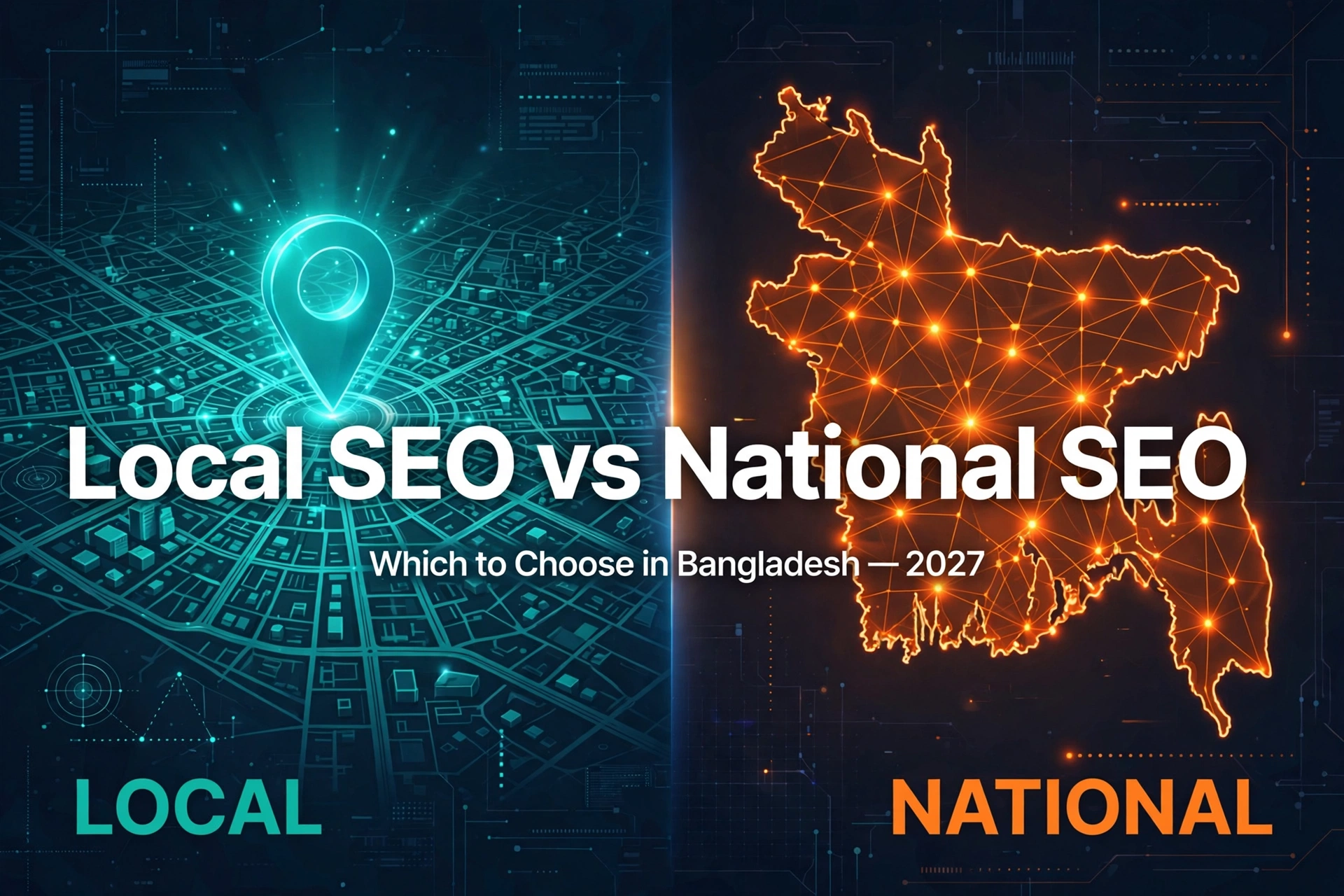
Red flag: a provider selling “national keyword rankings” to a single-location business while its Business Profile sits unclaimed with two reviews. The map pack drives more calls than organic positions 4–10 ever will for local intent queries.
5. Entity SEO and AI Search Optimization
What it covers: making your brand legible as an entity — consistent identity across the web, Organization and Author schema, knowledge-graph signals — and structuring content so AI systems (Google AI Overviews, AI Mode, ChatGPT, Gemini, Perplexity) extract, cite, and recommend it. This is about being the answer, not just a blue link.
How to tell it’s done properly: the provider implements specific schema types (not just “we added schema”), produces FAQ/definition content formatted for extraction, and tracks AI visibility — some platforms now report AI citation metrics alongside traditional rankings. They give you the honest caveat: nobody controls AI citations directly; the work makes citation possible, not guaranteed.
Red flag: “AI SEO” that turns out to be ChatGPT-written blog posts with no schema, no entity work, and no measurement. Or worse, a guarantee of AI Overview placement — that guarantee is fiction.
6. SEO Audits and Consulting
What it covers: diagnosis and strategy. A proper audit systematically examines technical health, content, links, local presence, and analytics, and ends with a prioritized fix list — what to fix, in what order, at what cost. Consulting is ongoing strategic direction for businesses with in-house teams or developers.
How to tell it’s done properly: the audit names specific URLs, specific errors, and specific competitors — and you could hand it to a different provider to execute. Vague audits (“improve content quality”, “build more backlinks”) are padding. A good audit is the most valuable SEO document you’ll ever receive, whether or not you hire its author afterward.
Red flag: a free “audit” that’s actually a sales call with an automated tool screenshot, or any provider who treats the audit as a formality on the way to quoting a retainer.
Services at a Glance: What You’re Really Buying
| Service | What you’re really buying | Skip it (for now) if… |
|---|---|---|
| Technical SEO | A site Google can fully access and understand | A recent professional audit shows a clean bill of health |
| On-page & content | Pages that deserve to rank for mapped intents | Your pages already cover their topics completely and convert |
| Off-page & authority | External trust Google can verify | You dominate an uncompetitive local niche on content alone |
| Local SEO & GBP | Visibility where “near me” decisions happen | You have no physical presence or service area |
| Entity & AI search | Citability inside AI answers | Your fundamentals (technical + content) are still broken — fix those first |
| Audit & consulting | Diagnosis before spending | Never — this is the one service every engagement should start with |
How Providers in Bangladesh Actually Sell These
| Model | What it is | Honest assessment | Best for |
|---|---|---|---|
| Monthly retainer | Fixed monthly fee for ongoing work | The right model for sustained growth — but demand written monthly deliverables, not “SEO” | Ongoing campaigns with compounding goals |
| Project-based | Fixed price, defined scope and timeline | Excellent for bounded problems (migration, technical overhaul, content sprint) | One-time fixes with clear endpoints |
| One-time audit | Diagnosis + prioritized roadmap | The smartest first purchase in SEO; executable by anyone competent | Before hiring, or as a second opinion |
| Consulting / advisory | Strategy and oversight; your team executes | High leverage if you have in-house capacity; useless without it | Businesses with developers or content teams |
| Keyword-count package | “Rank X keywords per month” for a flat fee | Incentivizes easy, low-value keywords and shortcuts — the model behind most local SEO failures | Almost nobody; treat as a warning sign |
For realistic BDT ranges behind these models, see our SEO cost guide for Bangladesh — and for how to judge the person selling them, the complete hiring guide covers the vetting process step by step.
Common Mistakes When Buying SEO Services
- Buying the package before the diagnosis. Committing to twelve months of “full SEO” before anyone has audited your site is how businesses pay for link building on sites that needed three weeks of technical fixes.
- Comparing prices instead of scopes. Two quotes at wildly different prices are not comparable until deliverables are lined up side by side — content volume, technical depth, who does the work, reporting access.
- Paying for secrecy. If you don’t have direct access to your own Search Console, Analytics, and a record of what was done each month, you can’t verify anything — which is exactly the point.
- Treating AI search as a future problem. By 2027, AI-generated answers intercept a meaningful share of informational and commercial queries. A service plan with no entity or structured-data work is incomplete, not merely traditional.
- Signing long lock-ins with no review checkpoint. A shorter initial scope — audit plus 60 to 90 days — with a defined review before continuing beats a 12-month retainer with no exit.
When You’re Ready to Move Forward
The right sequence is almost always the same: audit first, then buy only the services the audit says you need, in the order it says you need them. That single habit separates businesses that get compounding returns from SEO from businesses that fund twelve months of theater.
If you want that starting diagnosis from someone who does this work every week, Tanveer Evan Rahat offers a free SEO audit for businesses in Bangladesh — real findings from your actual site, before any discussion of services or retainers. You can also explore his SEO services in detail, compare consultants versus agencies for your situation, or read what an SEO expert actually does day to day so you know what you’re buying.
Frequently Asked Questions
How much do SEO services cost in Bangladesh?
There is no single honest fixed number — ethical pricing follows an audit of your site’s condition and competition. Our SEO cost guide for Bangladesh publishes realistic BDT ranges by tier, from entry-level freelancers to audit-based specialist engagements, so you can calibrate before any sales conversation.
Can I buy just one service, like link building, instead of full SEO?
Sometimes — if an audit shows links are genuinely your bottleneck. But buying links for a site with broken technical foundations or thin content wastes money. The audit-first rule exists precisely to prevent buying the wrong service confidently.
Do I need AI search optimization, or is classic SEO enough?
Classic SEO remains the base — AI systems draw heavily on the same signals (authority, clear content, structured data). Entity and AI-search work is the layer on top, and it matters most where AI answers already intercept your customers’ queries. For most Bangladeshi SMEs, the right sequence is fundamentals first, AI layer second — not AI instead of fundamentals.
Should I hire a freelancer, a consultant, or an agency?
It depends on scope: independent consultants suit businesses wanting senior-level strategy with direct communication; agencies suit large scopes needing parallel teams; freelancers suit narrow, well-defined tasks. The disciplines are identical — what changes is who executes and how it’s managed. Ask who specifically will work on your account either way.
How long before SEO services show results?
Technical fixes can move metrics in weeks; content and authority typically take 3–6 months to compound; competitive commercial keywords often take 6–12 months. Our breakdown of realistic SEO timelines in Bangladesh covers this by scenario. Anyone promising faster across the board is selling something else.
What should a monthly SEO report actually include?
Traffic and leads from organic search, keyword visibility for commercial-intent terms, what was done that month (specific URLs and actions), and what’s planned next — with your own direct access to Search Console and Analytics. Reports built only on keyword positions or backlink counts are theater.